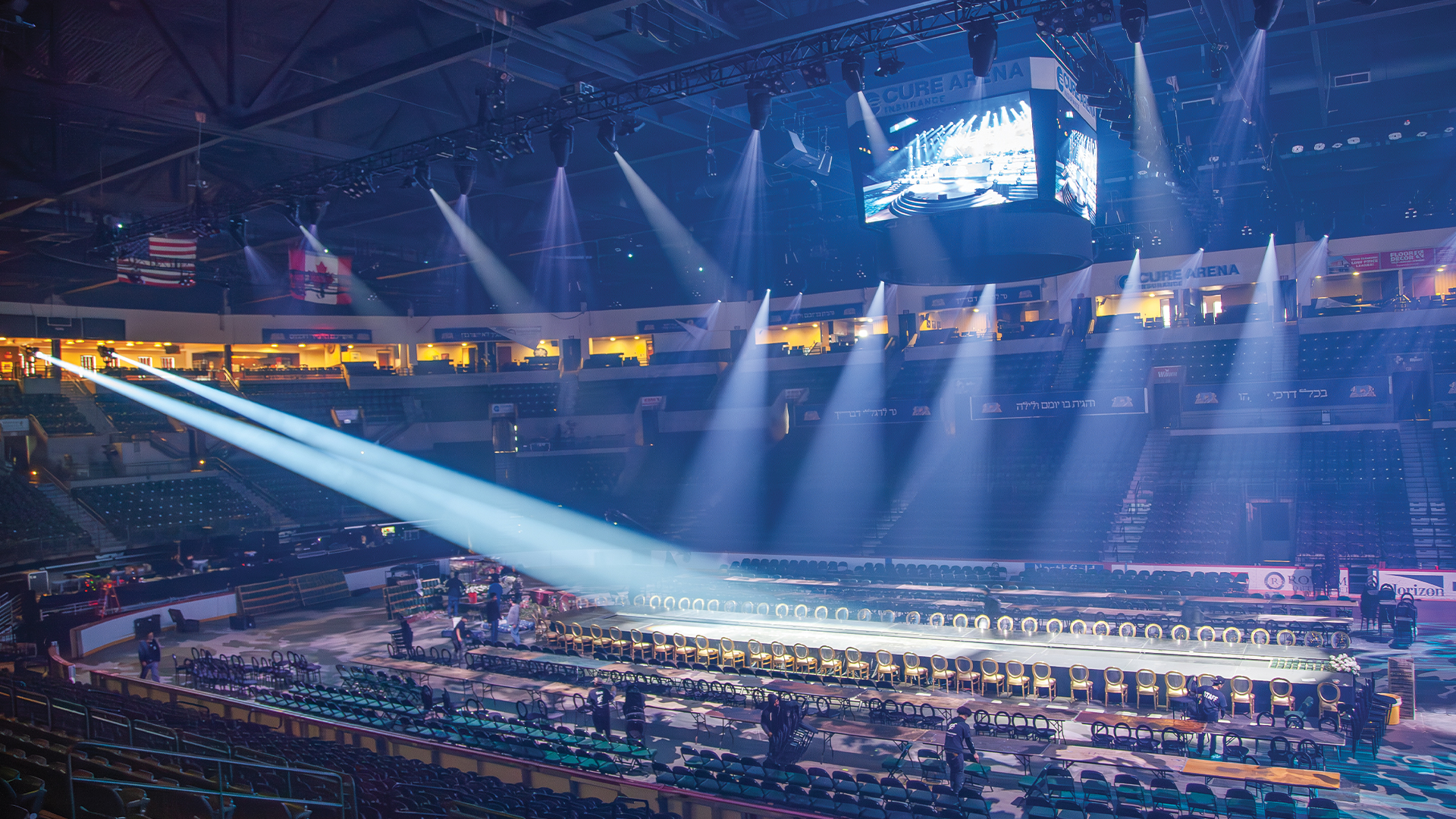
The tight-budget scenic) brief is possibly the most creatively demanding assignment in event production design. Any competent designer can produce impressive visuals given unlimited budget — the true measure of craft is extracting maximum visual impact from constrained resources. The production design industry’s most enduring truism holds here: the best designs are those where budget forced discipline, because unlimited spending tends to produce cluttered, over-specified environments where the creative concept is buried under materials. When done well, a budget-conscious scenic approach) is indistinguishable from expensive production design to everyone except the person who wrote the check. The distinction lies entirely in knowing which elements deliver the highest visual return per dollar spent — and ruthlessly prioritizing those elements over everything else.
Light as Scenery: The Highest Value Investment
The single highest-value scenic investment in a tight-budget production is not physical scenery — it is lighting). A well-designed lighting rig) operating on a modest physical stage can create visual environments of striking sophistication that far exceed what physical scenic elements at the same cost could achieve. A stage dressed with neutral black fabric) becomes a canvas for lighting: colour wash) transforms it into an abstract environment; gobos) cast texture across flat surfaces; haze) with beam fixtures) creates three-dimensional depth. ETC ColorSource PAR) fixtures — affordable LED wash units — deliver surprisingly versatile colour mixing at a price point accessible to modest budgets. Investing 70% of a tight scenic budget in lighting and 30% in physical elements consistently produces better visual results than the inverse allocation.
Fabric: Highly Versatile, Modular, and Budget Friendly
Large-format stretch fabric) — whether spandex), duvetyne), muslin), or sharkstooth scrim) — is the most cost-effective scenic material in the production designer’s palette, because it is inherently lighting-reactive, infinitely configurable, and reusable across many events. A custom stretch fabric frame) — aluminum extrusion with fabric tensioned across it — creates a clean, professional-looking scenic surface for a fraction of the cost of a built hard scenic flat. Sharkstooth scrim) is particularly powerful in budget scenic applications because of its magical dual nature: lit from the front it appears opaque; lit from behind it becomes transparent — creating reveal effects) of a visual drama completely disproportionate to the material’s cost. Rose Brand) and Rosebrand.com) are the industry-standard fabric suppliers that provide these materials in the grades and widths that professional production demands.
LED Wall as Scenic Background: The Modern Budget Equalizer
The declining cost of LED wall rentals) has made the scenic LED wall economically accessible to productions that would have used expensive physical builds or projection systems a decade ago. An upstage LED wall) provides an infinitely reconfigurable scenic background that eliminates the need for multiple physical scene changes — the entire visual environment of the event can be transformed instantly through content changes. For corporate events) with multiple segments requiring distinct visual environments, a single LED wall) with carefully designed content for each segment can functionally replace a scenic change budget that would have cost multiple times its rental price. LED panel rental) from companies like VER), Christie Lites), and regional event AV suppliers has become competitive enough that specifying even a modest 8×4 meter screen) within a tight budget is now a realistic rather than aspirational scenic decision.
Repurposing and Cross-Budget Thinking
In tight-budget scenic design, the distinction between scenic budget) and equipment budget) is an accounting convention that the creative production designer challenges aggressively. Equipment specified for functional purposes frequently has scenic value that a non-design-oriented procurement process would overlook. Speaker arrays) from d&b Audiotechnik) or L-Acoustics) are aesthetically striking objects when lit well — touring speaker design has become visually sophisticated enough that PA systems function as scenic elements at zero additional cost. Road cases) — painted, lit, and arranged intentionally — create an industrial aesthetic) that communicates production authenticity. Truss structure) exposed rather than covered by masking becomes a design feature rather than a cost item. The scenographic vocabulary) of production-as-found is a legitimate and visually powerful approach that converts budget constraints into aesthetic choices.
The Constraints-Driven Design Movement in Live Events
Some of the most influential scenic design work in live events has emerged directly from severe budget constraints. The minimal aesthetic) of early Talking Heads tours in the 1970s and 1980s — where David Byrne) and scenic designer Sandy McLeod) worked with deliberately exposed production elements and unconventional staging — became a defining aesthetic precisely because budget and conceptual constraint forced radical creative choices. Similarly, the stripped touring productions) of Peter Gabriel’s Security tour) in 1982–83 demonstrated that choreography, lighting, and performer relationship) to space could create visual experiences of extraordinary impact without expensive physical scenery. These historical examples remind contemporary production designers that constraints are not the enemies of creativity — they are, properly embraced, among its most reliable generators.
