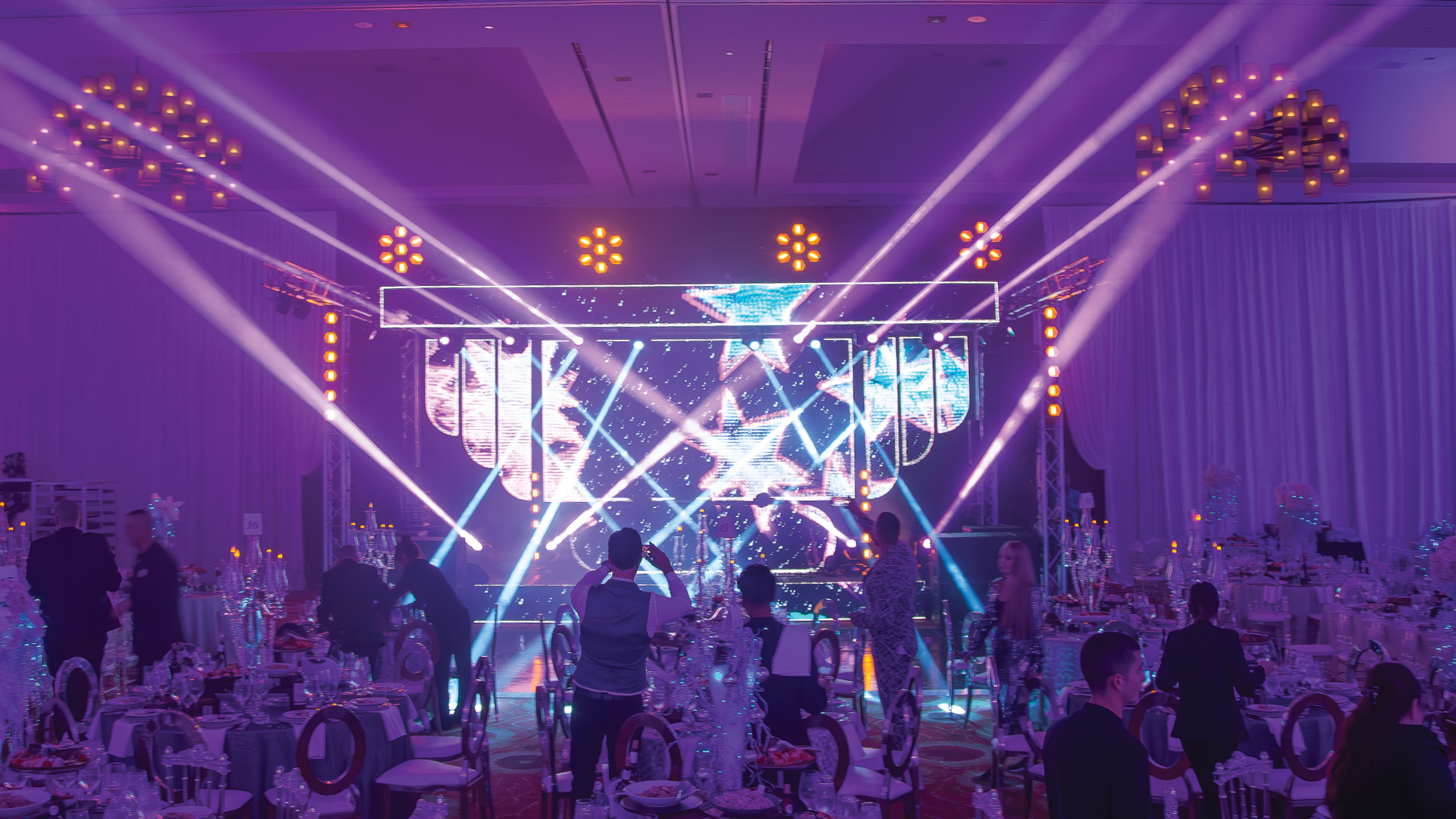
The lighting designer watched the stage during dress rehearsal, building cues that would guide audience attention throughout the gala. When the host announced award winners, a spotlight would snap to the winner’s table, creating instant focus. During keynote presentations, narrow beams would isolate speakers against darker surroundings. At emotional video moments, the room would go nearly dark, concentrating attention on screens. These spotlight techniques represent a refined craft using light’s ability to command human attention for deliberate storytelling effect.
The Attention Mechanics of Spotlighting
Human vision evolved to notice brightness changes and contrast because these visual cues often signaled important environmental changes. This biological programming makes spotlighting extraordinarily effective at directing attention. When a spotlight illuminates someone in an otherwise dim room, viewers cannot help but look—the response is automatic and nearly irresistible. Production designers who understand this mechanism use spotlighting strategically, deploying it for moments that deserve audience focus rather than indiscriminately.
The contrast ratio between spotlight and ambient light determines effectiveness. A spotlight in a fully lit room creates minimal contrast and correspondingly minimal attention shift. The same spotlight in a darker environment creates dramatic contrast that commands focus instantly. Designers collaborate with production teams to manage ambient levels during spotlight moments, ensuring sufficient contrast for the desired effect. This coordination often requires dimming house lights, reducing stage wash, or timing spotlight moments for program segments where darkness is appropriate.
Follow Spot Operation Excellence
Follow spots require skilled operators whose work significantly affects production quality. An excellent follow spot operator anticipates movement, leading subjects smoothly rather than trailing behind. They maintain consistent beam size and intensity regardless of distance changes. They execute color changes and intensity adjustments precisely on cue. Fixtures like the Robert Juliat Cyrano, Lycian M2, and Strong Super Trouper provide the precision tools operators need, but the human skill determines ultimate quality.
Communication systems connect follow spot operators to stage managers and lighting designers. Clear-Com and RTS intercom systems enable real-time direction: “Stand by spot one… spot one go to table six.” Operators receive advance notice of upcoming picks, enabling preparation that creates smooth transitions rather than panicked searching. This coordination—cue calling, operator acknowledgment, precise execution transforms spotlight work from improvisation into choreography.
Automated Spotlighting Systems
Automated tracking systems offer alternatives to human-operated follow spots. ZACTRACK and BlackTrax use position tracking technology to aim moving head fixtures at performers wearing small transmitters. This automation enables spotlight effects without dedicated operators at remote positions—useful for events with limited labor budgets or positions where human operators cannot be positioned safely. The Martin MAC Viper and similar high-output moving heads serve as automated spotlight sources when integrated with tracking systems.
Automated systems excel at consistent, repeatable tracking but may lack the artistic judgment skilled human operators provide. A human operator recognizes when to widen the beam to include a spontaneous gesture, when to hold position during an emotional pause, when the subject’s intent differs from their physical position. Productions requiring nuanced spotlight work may prefer human operation despite higher costs; productions with predictable, defined movement patterns may achieve excellent results with automation at lower operational expense.
Spotlighting transforms events by giving designers direct control over audience attention. The combination of human biology’s responsiveness to contrast, skilled operation of professional equipment, and strategic deployment during program moments creates effects that shape how audiences experience events. Productions that master spotlight technique guide viewers through experiences with intention rather than leaving attention to wander randomly—a fundamental advantage in environments competing for engagement against countless distractions.
