Introduction
Ballroom events—from corporate galas to award ceremonies—demand elegance, functionality, and impactful visuals. LED walls have become central to creating immersive stage environments, enhancing presentations, and amplifying brand messaging. However, choosing the right LED wall configuration is critical to achieve visual clarity, audience engagement, and technical feasibility. Understanding placement, shape, resolution, and integration with lighting and audio ensures every ballroom event looks polished and professional.
The Evolution of LED Walls in Event Production
Historically, ballrooms relied on projection screens or static backdrops. Early LED panels were heavy, low-resolution, and limited in flexibility. The last decade brought lightweight, modular panels from brands like ROE Visual, Absen, and Unilumin, making large seamless walls feasible even in ornate venues. Pixel pitch improvements allow close viewing without noticeable pixelation, while HDR-capable panels deliver vibrant, true-to-life colors, transforming ballrooms into visually stunning spaces.
Choosing the Right Pixel Pitch
Pixel pitch determines viewing distance and image clarity. Ballrooms often host seated guests at varying distances, making proper pixel pitch selection essential. Common choices include:
-
P3–P4 for medium-sized walls viewed from 15–25 feet.
-
P2–P2.5 for closer seating arrangements or VIP zones.
-
P5–P6 for wide ballroom stages where attendees are further from the display.
AV teams must balance cost, panel weight, and visual resolution, as finer pitches increase budget and rigging demands.
Common Ballroom LED Wall Configurations
Center Stage Wall
The most traditional configuration, a center stage LED wall, acts as the focal point behind speakers or performers. Large rectangular walls deliver high-impact visuals, branded animations, and live video feeds. Often paired with side fill screens or stage wings, this setup ensures everyone in the room has clear sightlines.
Multi-Screen Layouts
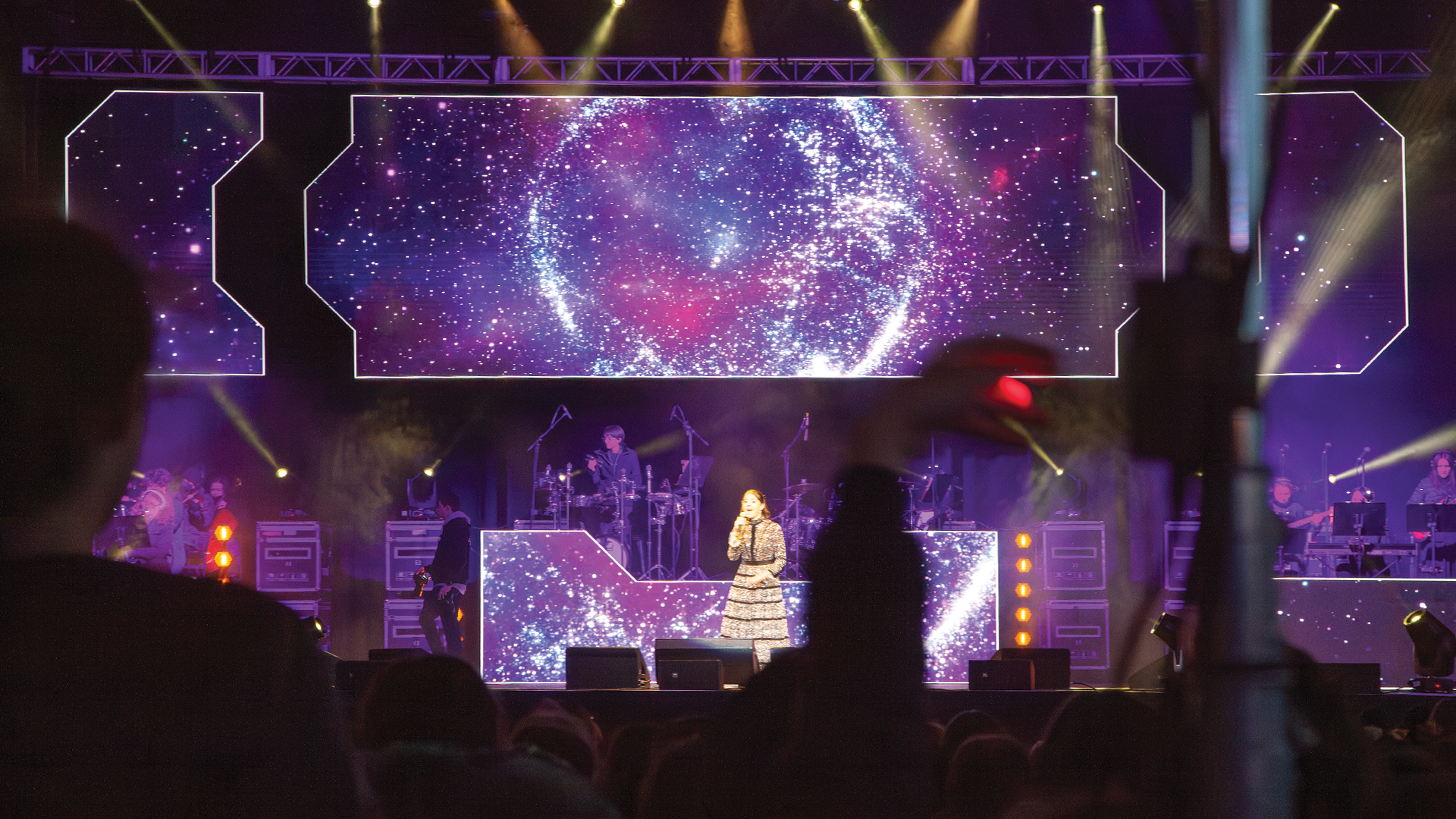
For events requiring dynamic content, multi-screen layouts—such as stacked or angled LED panels—provide depth and visual interest. For instance, a central main wall with two angled side walls can create a semi-immersive environment. Brands like ROE Visual and Absen offer flexible panels that allow custom shapes without visible seams.
Split Wall / Video Pods
Split walls divide a stage into smaller zones, each displaying separate content. This is ideal for award shows or multi-speaker panels, allowing simultaneous branding, live feeds, and interactive graphics. AV teams often use media servers like Disguise or Pandoras Box to manage multiple streams across these zones seamlessly.
Curved and Semi-Circular Walls
Curved walls wrap slightly around the stage, providing an immersive feel while maintaining audience sightlines. Flexible panels and LED strips can create arcs, rings, or wave effects. This configuration enhances depth perception and allows designers to project motion graphics that flow naturally across the surface.
Floor-to-Ceiling Walls
In grand ballrooms, floor-to-ceiling LED walls maximize visual impact. These walls can serve as dynamic backdrops for performances, product launches, or gala stages. Modular designs allow customization for room dimensions and ceiling heights, while maintaining structural stability with truss and rigging from Prolyte or Tomcat.
Integrating LED Walls With Lighting and Audio
Successful ballroom setups combine LED walls with scenic lighting and line array audio systems. Moving heads from Robe, Martin, or Clay Paky enhance depth, highlight presenters, and complement motion graphics. Audio systems from JBL, Meyer Sound, or L-Acoustics deliver clear speech and music without interfering with sightlines. Synchronization between LED content, lighting cues, and audio ensures a cohesive, immersive experience.
Content Planning for Ballroom LED Walls
Content must consider wall shape, pixel pitch, and audience distance. Motion graphics, live video, and pre-recorded visuals need scaling and formatting for seamless display. Designers use software like Notch, TouchDesigner, and Resolume Arena to manage content layers, transitions, and interactive elements. Branded animations and subtle visual cues can guide audience attention and reinforce messaging throughout the event.
Rigging and Installation Considerations
Ballroom ceilings often have chandeliers, ornate moldings, or limited rigging points. AV teams must account for:
-
Load limits and weight distribution for suspended LED walls.
-
Modular floor stacks for temporary setups.
-
Cable management and access to power.
-
Onsite testing for alignment, brightness, and color calibration.
Previsualization tools such as Vectorworks Spotlight or AutoCAD are essential for planning complex configurations and avoiding last-minute installation issues.
Case Studies: Successful Ballroom Configurations
Corporate galas by Google, Microsoft, and Salesforce showcase effective LED wall use. Google used a multi-screen layout with a central main wall and two angled side panels for product demos. Microsoft employed curved walls for immersive branding during a corporate awards ceremony. Salesforce combined floor-to-ceiling LED walls with ambient washes to create a premium gala atmosphere while highlighting key sponsors.
Future Trends in Ballroom LED Configurations
-
Flexible and transparent LED panels allow partial wall views and creative layering.
-
Interactive touch-sensitive LED walls enable real-time audience engagement.
-
AI-driven content mapping synchronizes motion graphics with live presentations automatically.
-
Integration with hybrid event technology, ensuring online attendees experience the same visual impact.
Practical Tips for AV Teams
-
Match pixel pitch to audience distance for optimal clarity.
-
Use modular panels for easier transportation and setup.
-
Integrate LED walls with lighting and audio to create a cohesive stage environment.
-
Plan multiple configurations and previsualize in software to avoid alignment issues.
-
Test content on the actual panels before the event to ensure color accuracy.
-
Account for room limitations such as ceiling height, chandeliers, and emergency access.
Conclusion
Choosing the right LED wall configuration is essential for ballroom events that aim to impress and engage. By carefully considering stage layout, pixel pitch, wall shapes, content, lighting, and audio integration, AV teams can transform a ballroom into an immersive, visually stunning environment. From center-stage walls to curved, multi-screen, or floor-to-ceiling setups, LED walls provide flexibility, creativity, and professionalism that elevate every event.
