Stadium Climate Extremes: The Brief No Spec Sheet Addresses
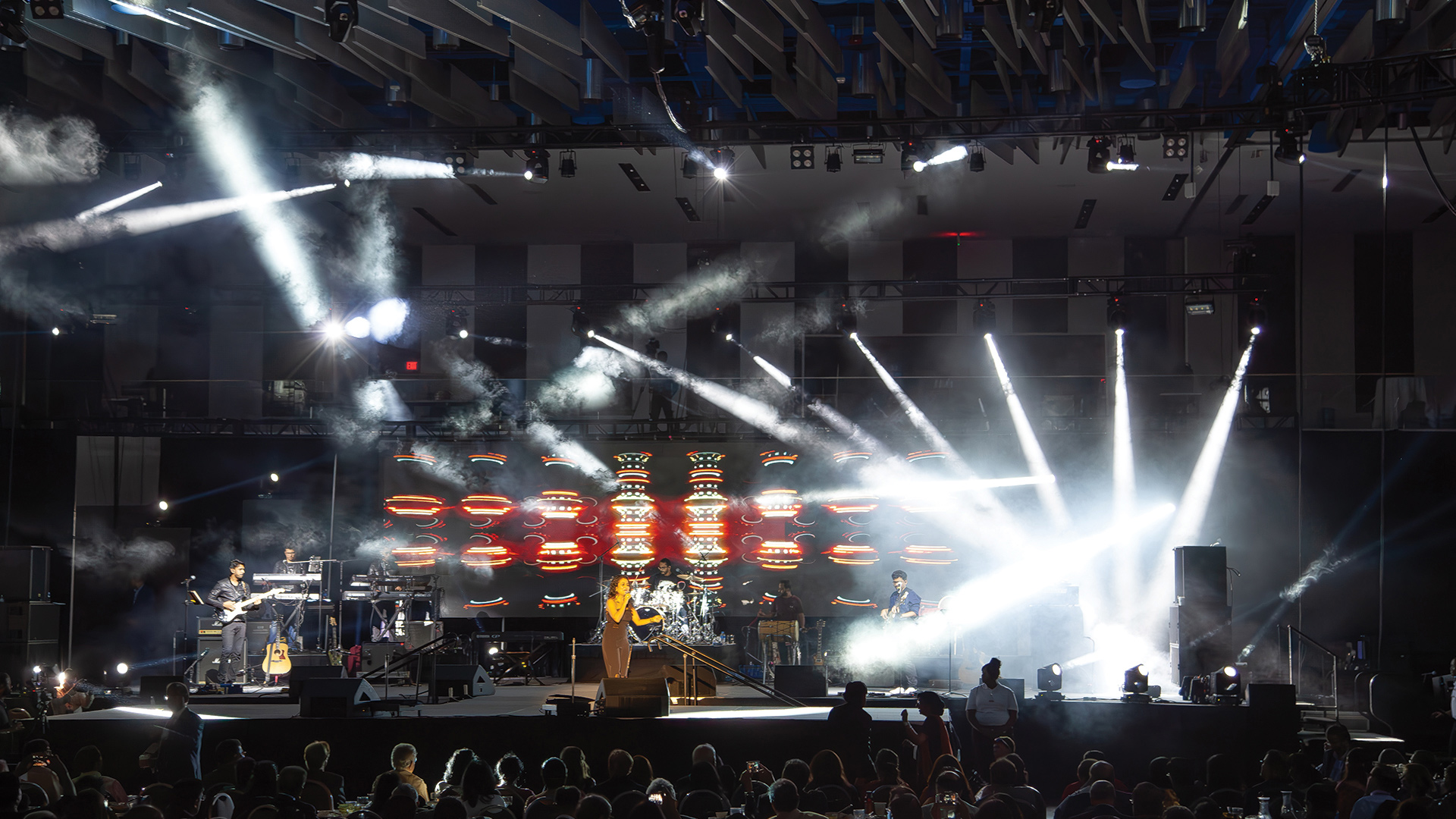
A JBL touring system performing at the Cotton Bowl in Dallas during a July concert—stage temperatures exceeding 42°C, direct sunlight on amplifier racks, audience demand requiring sustained SPLs above 110dB for 2.5 hours—operates under thermal stress conditions that the product’s published specifications describe in aggregate but that the specific combination of factors creates in ways more demanding than any single-variable specification suggests.
The same system performing at the Stade de France during an October touring date—backstage temperatures of 6°C during the 6AM load-in, amplifier initialization in cold conditions that extends startup time, cold-start transducer materials stiffer than their operating state—operates under a completely different class of stress that the summer stadium brief never generates. Both represent the extreme end of the operational envelope that touring stadiums impose, and the production companies that have navigated both extremes with JBL VTX systems have accumulated the institutional knowledge that makes reliable performance at these extremes achievable by design rather than by luck.
Heat Management: When Summer Stadiums Become Thermal Challenges
The thermal management challenge for JBL touring systems at summer stadium dates combines three compounding factors: high ambient air temperature (which raises the baseline thermal state from which all electrical components begin their thermal load cycle), direct solar radiation on exposed equipment (which adds 15–25°C to the surface temperature of dark-colored equipment in direct sunlight above the ambient air temperature contribution), and the sustained electrical power dissipation of high-SPL operation (which generates additional heat that the thermal management system must remove).
Crown I-Tech HD amplifiers in summer stadium racks—exposed to backstage temperatures of 38°C ambient—begin their thermal load cycle from a starting point that is 20–25°C above the moderate-temperature starting point that their thermal design was optimized for. The I-Tech HD’s rated maximum ambient operating temperature of 40°C provides a theoretical safety margin of 2°C at these conditions; in practice, rack interior temperatures (where forced air cooling is less efficient than open-air conditions) can exceed ambient air temperature by 5–10°C, bringing actual amplifier operating conditions close to or above the rated limit.
Active cooling solutions—specifically, industrial blower units forcing ambient air through amplifier racks at velocities sufficient to maintain internal rack temperatures within specification—are the production infrastructure investment that summer stadium JBL deployments require. The forced air flow specification for a rack containing 8 Crown I-Tech 12000HD amplifiers in 38°C ambient conditions requires approximately 800 CFM of cooling airflow to maintain internal rack temperatures within rated limits during sustained high-SPL operation—a flow rate achievable with commercial HVAC blower units that production companies running regular summer stadium engagements should maintain in their touring inventory.
Cold Start Protocols: Winter Touring With JBL Systems
Cold-start operation for JBL touring systems—loading in at near-freezing temperatures before heating the venue, operating during the transition from cold backstage to warmed venue interior, managing the 3–4 hour temperature equalization period between load-in completion and show time—requires operational protocols that protect both the electronic components and the acoustic transducers from the cold-start failure modes that low temperatures create.
The JBL VTX V25-II’s woofer surround material—a butyl rubber compound chosen for its consistency across the operational temperature range—begins to stiffen measurably below 5°C, increasing the mechanical compliance required to achieve rated excursion and reducing the sensitivity of the system’s bass response. A system measured and optimized during a cold-morning soundcheck will show a subtle low-frequency performance improvement as the temperature rises to normal operating range—a change that requires re-verification if the soundcheck measurements are to serve as the operational reference for the evening’s performance.
Crown amplifier cold-start initialization at temperatures below 5°C may require extended initialization times as the power supply’s thermal compensation circuits adjust to cold-component resistance values. This initialization delay—typically 15–30 seconds longer than at moderate temperatures—must be factored into the production schedule rather than interpreted as a fault indication.
Case Studies: The Extremes That Built the Protocols
The operational protocols that production companies apply to JBL touring systems in extreme stadium conditions were not designed in theoretical engineering exercises—they were developed in response to the specific failures and near-failures that extreme conditions produced when production teams lacked the protocols to prevent them.
The 2014 incident at a Middle Eastern stadium production—where a touring system’s amplifier rack, positioned in a concrete equipment bay that received direct solar radiation for 8 hours before the evening performance, exceeded safe operating temperature 45 minutes into the show and triggered protective thermal shutdown across three amplifier channels mid-performance—generated the specific protocol that production companies now follow for exposed rack positions at high-temperature venues: mandatory pre-show temperature measurement inside every rack, with portable active cooling deployment required before system energization if measured temperatures exceed 35°C inside the rack.
The 2017 Scandinavian cold-start incident—where a touring team loaded in at -3°C at an outdoor stadium, applied full signal to a cold system before the warm-up period specified by their system documentation, and experienced two woofer surround separations in the main hang within the first 10 minutes of operation—generated the warm-up protocol that now specifies progressive level increase over 20 minutes of initial system operation at cold-start temperatures: beginning at 50% of operating level for 5 minutes, increasing to 75% for the following 10 minutes, and reaching full operating level only after 15 minutes of progressive warm-up.
The Engineering Investment That Makes Temperature Survival Possible
The engineering design decisions that allow JBL VTX systems to survive extreme stadium temperature conditions are distributed across the system’s components in ways that the system’s performance specifications don’t explicitly acknowledge but that the operational experience of extreme-condition deployment reveals.
The Crown I-Tech HD’s universal input power supply—operating from 100–240V input without adjustment—provides resilience against the power quality variations that extreme-condition venues frequently produce alongside their temperature challenges: outdoor summer stadium events in markets with stressed power infrastructure, indoor winter events in facilities whose mains quality deteriorates during the high electrical demand periods that heating systems create.
The VTX cabinet’s polyurea finish coating that protects against mechanical damage during touring also provides meaningful thermal insulation that reduces the rate of internal temperature change during the transition between extreme external temperatures and the cabinet’s operating temperature. This thermal inertia is an incidental benefit of the mechanical protection specification rather than a designed thermal management feature, but its effect—reducing the temperature gradient stress on cabinet joinery during rapid ambient temperature changes—contributes to the cabinet’s long-term structural integrity in extreme-condition deployments.
The systematic documentation culture that production companies who regularly deploy at temperature extremes maintain—recording ambient temperatures, rack temperatures, warm-up procedures, and any anomalous system behaviors in the production log—builds the institutional knowledge base that makes the next extreme-condition deployment more reliable than the previous one. That institutional knowledge, accumulated across hundreds of extreme-condition shows, is the competitive asset that distinguishes specialist touring production companies from generalists encountering the same conditions for the first time.
