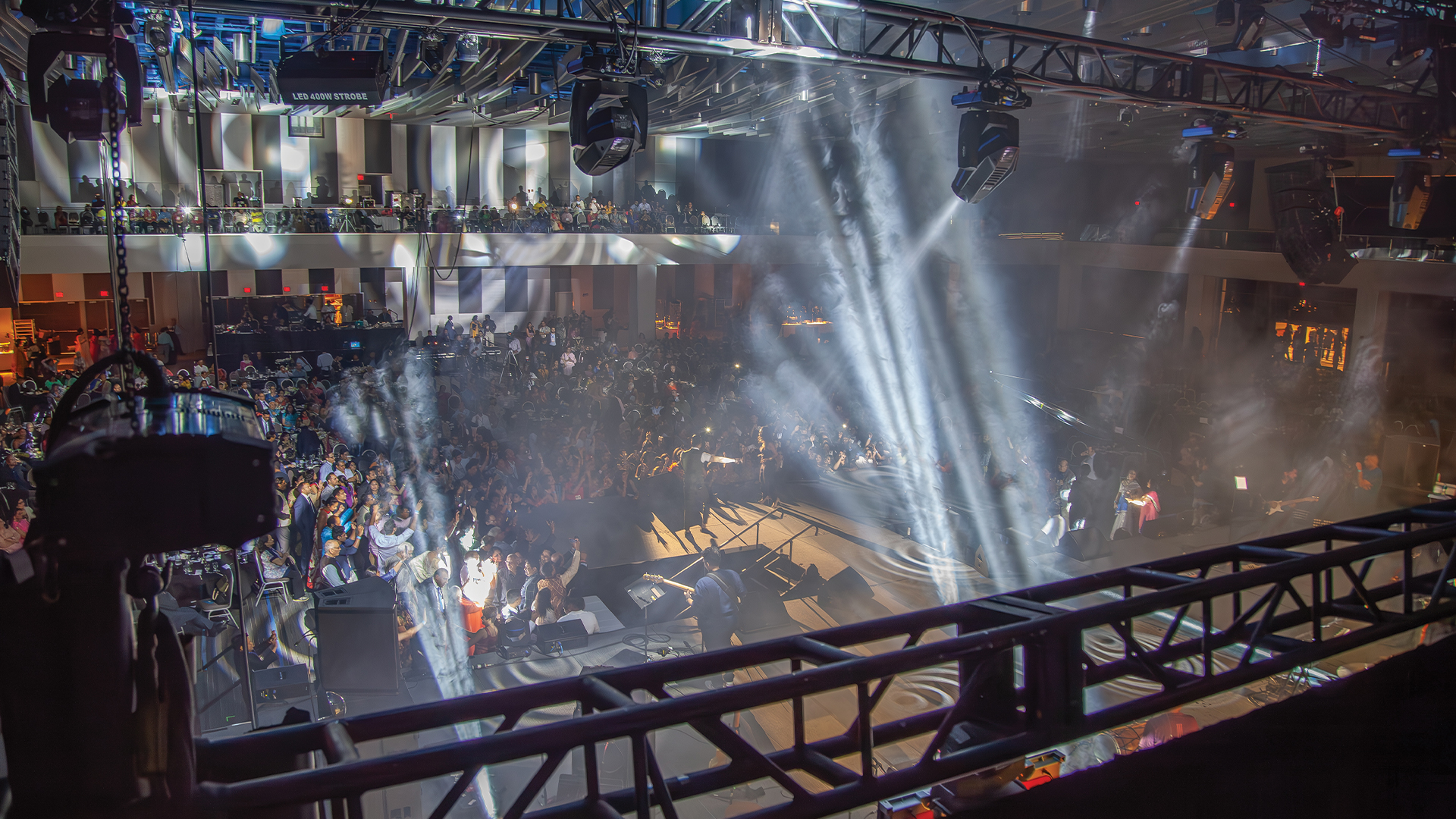
In live event production, few constraints test a rigging team’s ingenuity more brutally than tight rigging points — venues where the number, position, or weight rating of structural attachment points fundamentally refuses to accommodate the show design drawn up in a production office miles away. The gap between what a lighting designer envisions hanging from a perfectly distributed grid and what a 1920s ballroom ceiling with four usable beam clamps will actually support is where entire show designs get rebuilt from scratch under the worst possible time pressure. Understanding the nature of these constraints — structural, regulatory, logistical — is what separates touring riggers who routinely solve these problems from crews who discover them on load-in morning.
Why Rigging Point Density Matters More Than Total Capacity
The instinct when facing tight rigging is to focus on the headline number: total load capacity available. But experienced rigging professionals know that point density — the number of usable points distributed across the structural grid — is often the more binding constraint. A single I-beam rated at 5,000 kilograms can only accept load in a very limited horizontal footprint. Spreading a lighting rig that requires 20 suspension points across a grid with only 8 viable beams forces either dramatic rig redesign or the engineering of spreader beams and bridle systems that distribute load laterally across a single structural member. Both solutions add weight, add complexity, and add time to the build — three resources that compressed event schedules refuse to provide generously.
Structural Assessment Before Design Locks
The only reliable defense against tight rigging point surprises is a thorough structural survey conducted before the show design is finalized — not after it’s been approved by the client. Structural engineers commissioned to assess a venue’s ceiling or roof structure will produce a load distribution map showing point capacities, beam orientations, and recommended attachment configurations. For permanent venues like hotels, conference centers, and performing arts complexes, these surveys are often available from the building’s engineering team — but they must be requested specifically, because venue sales staff rarely volunteer structural limitations when booking an event. Companies like Unusual Rigging, Kinesys, and All Access Staging routinely conduct pre-production structural surveys as a standard deliverable before any complex rigging system is designed.
Bridle Geometry and Load Spreading Techniques
When the available rigging points don’t align with the design’s ideal hang positions, bridle rigging — using two or more slings running from a single load to multiple anchor points — becomes the primary engineering tool. The geometry of a bridle directly affects the forces experienced by each leg: a wide-angle bridle (two sling legs diverging at a large angle) multiplies the tension in each leg far beyond the suspended load weight. The rule used by most certified riggers is that a bridle angle exceeding 120 degrees between legs is unacceptable — at 120 degrees, each leg bears the full weight of the load rather than sharing it. Calculating bridle forces correctly requires either manual trigonometry or dedicated software like Rigging Explorer or the load calculation modules built into Vectorworks Spotlight. Getting these calculations wrong is not an aesthetic problem — it is a structural failure risk.
Motor Placement Constraints and Chain Length Management
In overhead rigging systems, chain hoists — from manufacturers including Lodestar CM, Chainmaster, and STAGEMAKER by Verlinde — must be hung from the structural anchor point and drop their chain to the truss below. When rigging points are limited, the motor positions are fixed and the designer must work around them. In low-ceiling venues, chain stack height — the physical space required for the motor body plus a full chain stack at minimum trim height — can be so constrained that standard hoists won’t fit. Compact mini-hoist configurations and beam trolley systems become the only viable option, introducing a separate equipment procurement challenge that must be identified in pre-production, not discovered when a standard CM Lodestar physically cannot fit between beam and truss at the required trim height.
Ballroom and Hotel Venue Rigging: The Industry’s Most Consistent Challenge
The hotel ballroom represents the live event industry’s most consistently challenging rigging environment. Ballroom ceilings are typically constructed with decorative elements — coffers, chandeliers, ornamental plasterwork — that obscure the structural members above and create the impression of a generous overhead space that is actually riddled with inaccessible or fragile areas. The ballroom rigging survey is a specialized discipline practiced by companies like Quorum Events and Creative Technologies, who maintain relationships with property engineers at major hotel chains and can access structural documentation that venue operations staff don’t typically possess. A thorough ballroom survey will identify not just capacity, but the precise attachment hardware compatible with each structural element — critical because ceiling damage liability in luxury hotel properties can exceed the value of the entire event production contract.
Regulatory Compliance and Working Load Limits
Every component in a rigging system must be rated and applied within its Working Load Limit (WLL) — the maximum load a component is designed to support under normal conditions, factoring in an engineering safety factor (typically 7:1 or higher for overhead rigging). In the UK, LOLER (Lifting Operations and Lifting Equipment Regulations 1998) governs inspection and documentation requirements for all lifting equipment, including theatrical rigging. In the US, ANSI E1.6-1 covers powered hoist systems; ETCP (Entertainment Technician Certification Program) certification is the industry’s standard qualification for riggers working in these environments. Productions that bypass or underqualify their rigging supervision to save cost are not just cutting corners — they are assuming liability for structural failures that, in occupied event environments, carry catastrophic human consequences.
Historical Context: The STAGE COLLAPSE Era and Its Lessons
The modern rigging safety culture in live events was forged, in large part, by a series of high-profile structural failures in the 2010s. The Indiana State Fair stage collapse in 2011 — which killed seven people when a roof structure failed under wind load — along with several other incidents involving improperly loaded rigging systems, prompted an industry-wide reassessment of structural engineering standards for temporary event structures. The ESTA (Entertainment Services and Technology Association) accelerated work on ANSI standards for temporary event structures, and many major festivals and events began requiring stamped engineering drawings as a contractual prerequisite rather than a best practice recommendation. Today, any production bypassing structural engineering sign-off on a rigging system is operating against an industry standard that was written in the hardest possible lessons.
