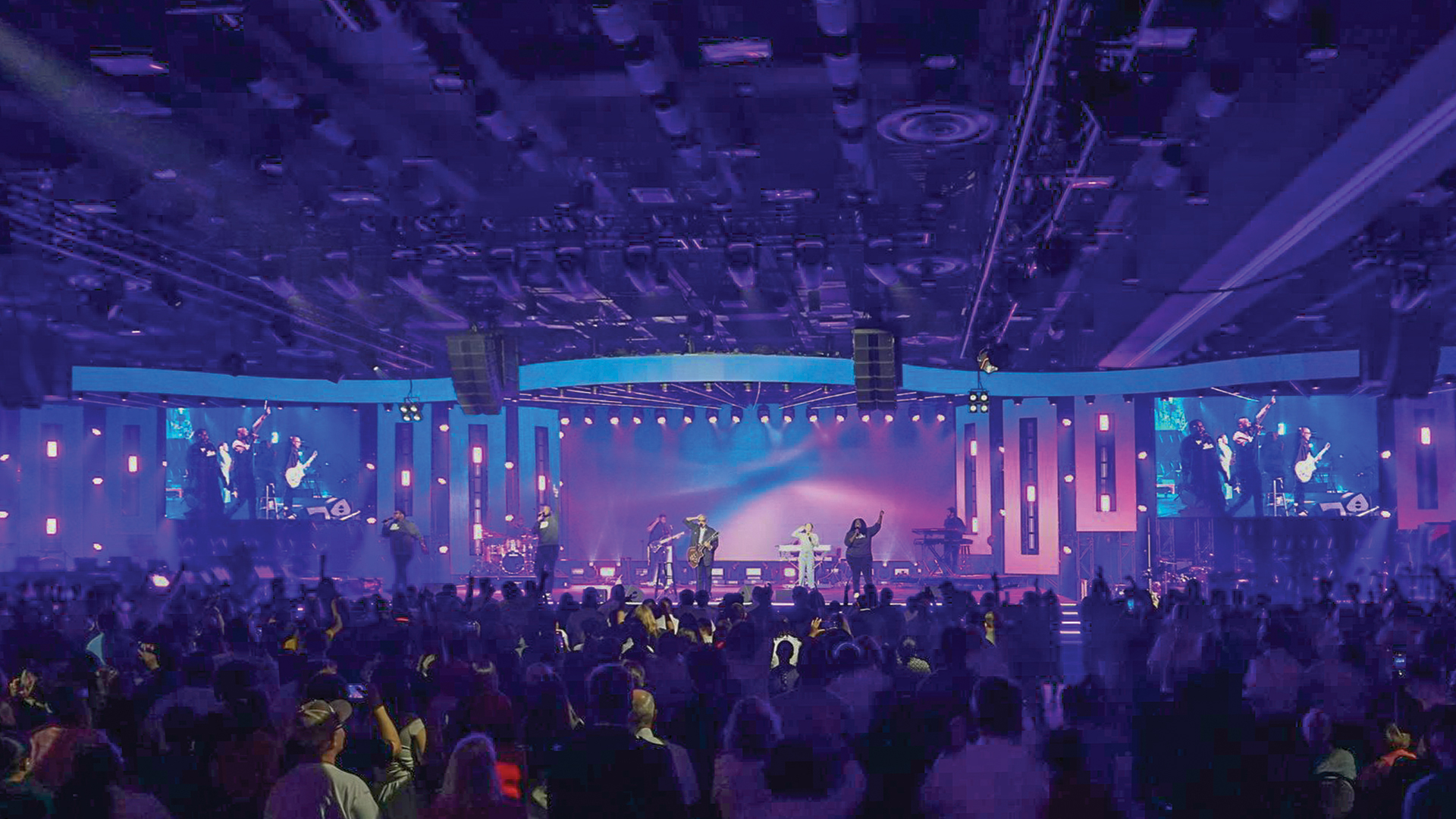
The promise of LED video technology seduces production designers with visions of seamless, brilliant displays that transform any venue into a canvas for digital storytelling. Reality, however, occasionally involves expensive equipment developing severe stage fright. When multi-million-dollar LED walls decide they’d rather remain hidden, the ensuing drama rivals anything happening on stage.
The Award Show That Almost Wasn’t
A prestigious music awards ceremony at a major London arena invested substantially in cutting-edge ROE Visual LED panels—specifically, the Carbon Series CB5 known for exceptional colour accuracy and seamless cabinet connections. The design featured a massive curved LED backdrop spanning 40 metres wide and 15 metres tall, complemented by floor-mounted panels creating an immersive environment for performers.
Load-in proceeded according to schedule until the video engineering team attempted to power up the system. Individual cabinets flickered to life sporadically—some displaying perfect colour calibration test patterns, others stubbornly remaining dark, and a concerning percentage showing random pixel artifacts that suggested serious data transmission problems. The Brompton SX40 LED processors reported full connectivity, yet the physical evidence contradicted their optimistic status indicators.
With broadcast commitments looming, the production team implemented emergency protocols. Massive kabuki drops were rigged in front of the problematic sections, with contingency lighting designs hastily programmed should the walls refuse to cooperate. The ceremony’s creative director watched nervously as technicians traced kilometres of fiber optic cabling, searching for the fault that threatened to derail the broadcast.
The Evolution of LED Display Technology
Contemporary LED failures gain context when examining the technology’s remarkable evolution. The earliest LED video displays emerged in the 1990s, featuring comparatively crude pixel pitches measured in tens of millimetres. These pioneering systems—manufactured by companies like Barco and Daktronics—primarily served outdoor advertising applications where resolution demands were modest and viewing distances considerable.
The entertainment industry’s adoption accelerated following the development of surface-mount device (SMD) technology, which enabled dramatically tighter pixel pitches. When XL Video pioneered rental applications for touring productions, they established operational frameworks still relevant today. The introduction of common cathode technology by manufacturers like Unilumin and Absen improved energy efficiency while reducing heat generation—a persistent challenge in dense LED configurations.
The Corporate Gala’s Invisible Investment
A Fortune 500 company’s annual gala at a prestigious New York hotel featured an ambitious LED installation designed to showcase their technological innovations. The specification called for Absen PL2.5 Pro panels configured as a 360-degree cylindrical structure at the venue’s centre, controlled via disguise media servers running complex 3D content mapping.
The installation crew worked overnight to complete the build, with pixel mapping calibrations extending into early morning hours. When the client arrived for their technical preview, they confronted a cylindrical structure draped in velour curtains. Behind those curtains, approximately 40% of the panels displayed what technicians diplomatically termed ‘inconsistent behaviour’—some frozen on previous content, others cycling through diagnostic modes, and several showing the dreaded green screen of death indicating controller communication failures.
Investigation revealed that the Neutrik powerCON TRUE1 connections between several panel daisy chains had developed intermittent faults. The hotel’s aging electrical infrastructure delivered inconsistent voltage that triggered protective circuits in the panels’ power supply modules. The solution involved deploying portable power conditioning units and replacing every questionable connector—a process completed just 90 minutes before guest arrival.
Signal Distribution Nightmares
The complexity of modern LED wall signal distribution creates numerous potential failure points. Contemporary installations typically employ fiber optic transmission using protocols like 10-Gigabit Ethernet or proprietary systems. Each connection point represents a vulnerability—from the media server output through LED processors to individual cabinet receivers.
Major manufacturers have developed sophisticated solutions for distribution challenges. Brompton Technology’s Tessera platform enables distributed processing architecture, placing intelligence at the cabinet level rather than centralising all computation. Megapixel VR’s Helios processors offer similar distributed approaches, while NovaStar’s MCTRL4K controllers provide professional-grade reliability for demanding applications.
The Theatre Production’s Vanishing Act
A West End musical invested in revolutionary virtual production technology, incorporating fine-pitch LED panels to create dynamic backgrounds that would replace traditional scenic elements. The production specified Sony Crystal LED modules, known for exceptional black levels and colour reproduction capabilities that rival OLED displays.
During technical rehearsals, entire sections of the LED wall would spontaneously go dark—not gradually fading, but instant blackout as if someone had pulled a plug. The show control system running Figure 53 QLab showed all cues executing correctly. The Resolume Arena content playback software confirmed output remained constant. The processors reported healthy signal chains.
The culprit proved to be electromagnetic interference from the venue’s antiquated dimmer racks. The production’s lighting design incorporated both conventional tungsten fixtures and modern LED sources. When certain dimmer channels activated, the electromagnetic noise corrupted data signals running through inadequately shielded cabling. The solution required complete replacement of signal infrastructure with military-grade shielded cables and installation of ferrite chokes at critical junction points.
Thermal Management Considerations
LED panels generate substantial heat, particularly when operating at high brightness levels required for broadcast applications or venues with significant ambient light. Inadequate thermal management triggers protective shutdowns that can appear mysterious to operators unfamiliar with the underlying cause.
Modern panels incorporate sophisticated temperature monitoring with automatic brightness limiting when thresholds approach critical levels. Production planners must account for venue HVAC capacity, particularly in enclosed spaces where heat accumulation can rapidly exceed manageable limits. Outdoor installations face inverse challenges—extreme cold can affect LED driver performance and potentially damage panels not rated for sub-zero operation.
Best Practices for LED Wall Success
Preventing LED walls from hiding behind curtains requires comprehensive planning and rigorous execution. Cable management demands meticulous attention—every connection should be tested individually before panels are mounted. Power distribution calculations must account for peak consumption during all-white test patterns, not just typical content brightness levels.
Experienced crews arrive with comprehensive spare parts inventories—not just backup panels, but replacement receiving cards, power supplies, and signal cables. Field-serviceable designs from manufacturers like Leyard and INFiLED enable rapid component replacement without complete panel swaps.
Pre-production testing should replicate show conditions as closely as possible. Content should be tested at intended playback resolutions using final color profiles and gamma curves. Calibration sessions conducted with tools like ColourSpace or LightSpace CMS ensure consistent appearance across all panels.
The relationship between LED walls and their concealing curtains need not be adversarial. Through proper planning, quality equipment, and experienced crews, these remarkable display technologies consistently deliver the stunning visual experiences they promise. When they do choose to hide, the lessons learned strengthen the industry’s collective knowledge—ensuring that future productions benefit from hard-won wisdom about LED video deployment in demanding live environments.
