The Visible Enemy of LED Excellence
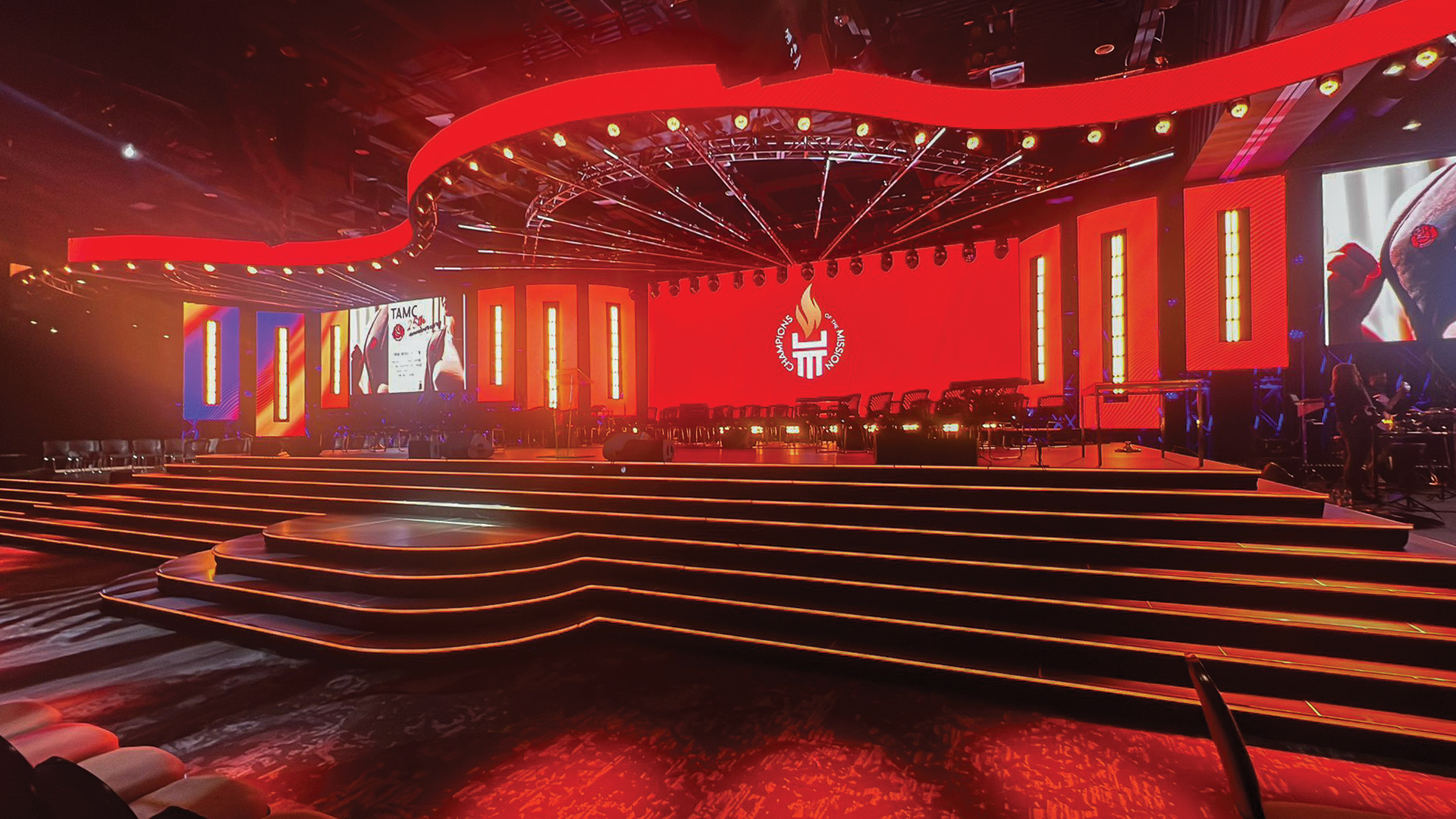
You’ve invested six figures in a stunning LED wall stretching forty feet across your general session stage. The content looks magnificent in preview. Then the house lights dim, cameras roll, and there it is—that maddening patchwork of brightness variation that transforms your premium display into a quilt of mismatched panels. Uniform brightness isn’t a luxury specification; it’s the difference between professional production and expensive embarrassment.
The challenge of LED brightness uniformity traces to the earliest days of large-format video displays. When Lighthouse Technologies and Barco pioneered modular LED systems in the early 2000s, manufacturers quickly discovered that individual LED components—even from the same production batch—exhibited measurable brightness variation. The physics of semiconductor manufacturing made perfect uniformity impossible; the art of compensation made it achievable.
Modern LED wall installations from ROE Visual, Absen, Leyard, and Samsung incorporate sophisticated calibration systems addressing these inherent variations. Yet calibration represents only one weapon in the uniformity arsenal. Achieving truly seamless brightness across large surfaces requires understanding the complete ecosystem of factors affecting visual consistency—from manufacturing tolerances through installation practices to environmental conditions.
Understanding the Sources of Brightness Variation
LED binning—the manufacturing process of sorting individual LED components by brightness, color, and voltage characteristics—establishes the foundation for uniformity potential. Premium manufacturers including Cree, Nichia, and Epistar sort LEDs into narrow bins with tight tolerances. Panels assembled from single bins exhibit better native uniformity than those using broader bin ranges, though single-bin sourcing commands premium pricing.
The driver electronics powering LED pixels introduce additional variation sources. Each panel contains driver ICs—typically from manufacturers like MBI or ICN—that regulate current to LED clusters. Slight variations in driver output multiply across thousands of pixels, creating systematic brightness patterns visible as horizontal or vertical banding across large surfaces.
Thermal characteristics compound brightness challenges as installations operate. LEDs dim as temperature increases—a predictable relationship that nonetheless affects different panel positions differently. Panels in the center of large arrays, surrounded by heat-generating neighbors, operate warmer than edge panels with better airflow. This thermal gradient creates brightness gradients that shift as walls warm during extended operation.
Viewing angle effects become pronounced on large installations where audience positions vary significantly. The brightness perceived from a seat directly centered differs from seats at extreme angles. LED manufacturers specify viewing angle ratings—typically 120° to 160° horizontal—but real-world perception within those angles still varies. Understanding this physics prevents specifying solutions that ignore geometric reality.
Panel Selection for Uniformity Success
The specification process for uniform LED installations begins with panel selection criteria beyond typical pixel pitch and brightness ratings. Request batch matching commitments from vendors, ensuring all panels in your installation originate from the same manufacturing run. The ROE Visual Black Pearl and Absen PL Series product lines offer batch-matching programs specifically addressing large installation uniformity requirements.
Common cathode LED technology, increasingly adopted by premium manufacturers, offers inherent uniformity advantages over traditional common anode designs. By providing individual voltage control to red, green, and blue elements, common cathode panels from SiliconCore and INFiLED maintain better color and brightness consistency across temperature variations—a significant advantage for installations operating in challenging thermal environments.
The cabinet design affects uniformity through its thermal management characteristics. Panels with active cooling—fans or heat pipes moving thermal energy away from LED surfaces—maintain more consistent operating temperatures across the installation. The Leyard TWA Series incorporates convection-optimized housing that promotes even thermal distribution without requiring active cooling components.
Pixel redundancy specifications affect uniformity maintenance over time. Panels designed with backup LED circuits—allowing failed individual pixels to be replaced without panel swaps—extend the uniformity lifespan of installations. Without redundancy, pixel failures accumulate as brightness anomalies that calibration cannot address.
Calibration Technology and Methodology
Camera-based calibration systems represent the current state-of-the-art for achieving uniform brightness across large LED installations. Systems from Brompton Technology, Colorlight, and NovaStar use precision cameras to measure individual pixel output, then generate correction data adjusting each pixel’s drive level to match target brightness specifications.
The Brompton Hydra calibration system exemplifies sophisticated uniformity correction. By capturing images of the installed wall under controlled conditions, Hydra generates per-pixel correction maps that compensate for manufacturing variation, installation inconsistencies, and aging effects. The system stores correction data in panel processors, applying adjustments in real-time during operation.
Calibration environment significantly affects results. Temperature variations during calibration translate directly to brightness variations during operation at different temperatures. Professional calibration occurs after walls reach stable operating temperature—typically 30-45 minutes of full-white display—ensuring corrections remain valid across typical operating conditions.
Recalibration frequency depends on installation permanence and criticality. Touring productions often recalibrate at each venue, compensating for transportation-induced variations. Permanent installations may recalibrate quarterly or annually, depending on operating hours and environmental stability. The grandMA3 and disguise media server platforms integrate calibration workflows, streamlining the process for productions with demanding schedules.
Installation Practices Affecting Uniformity
The physical alignment of panels during installation affects perceived uniformity even when calibration addresses individual pixel variations. Panels tilted slightly relative to neighbors create shadowing effects at seams that no calibration corrects. The rigging and ground support systems from Global Truss and Tyler Truss must maintain flatness tolerances within 1-2mm across entire installations—a demanding requirement for structures spanning dozens of feet.
Gap consistency between panels requires attention beyond obvious aesthetic concerns. Inconsistent gaps create varying amounts of black space between pixel areas, affecting localized brightness perception. Modern LED panels feature quick-lock mechanisms designed to maintain consistent spacing, but installation crews must verify alignment systematically rather than assuming mechanical systems achieve perfect results.
Power distribution architecture affects brightness uniformity through voltage drop calculations. Panels at the end of long power runs may receive slightly lower voltage than those near distribution points, creating subtle but measurable brightness differences. Professional installations specify distributed power architectures with multiple feed points, minimizing voltage variation across the installation.
Signal path integrity similarly affects uniformity. Data transmission errors—caused by damaged cables, poor connections, or electromagnetic interference—manifest as flickering or brightness inconsistencies. The Neutrik etherCON connectors standard on professional LED installations provide robust connections, but cable runs require testing and certification before calibration begins.
Content Considerations for Uniform Appearance
Content design choices significantly affect perceived uniformity. Solid color fields—particularly mid-brightness values in the 30-70% range—expose uniformity deficiencies that more complex content masks. Productions requiring extended display of corporate colors or gradient backgrounds must achieve higher uniformity standards than those featuring dynamic video content with natural variation.
Brightness level operation affects uniformity perception. Most LED walls achieve best uniformity when operated between 40-80% of maximum brightness. At very low levels, driver linearity limitations create visible stepping; at maximum output, thermal effects accelerate and component stress increases variation. The content mastering process should target these optimal operating ranges.
Color temperature consistency interacts with brightness uniformity. Variations in individual LED color output create perceived brightness differences even when luminance measurements match. The white point calibration addressing color consistency simultaneously improves brightness uniformity perception—a reminder that these characteristics remain fundamentally linked.
Media server color management features help maintain uniformity across content types. The Disguise and Resolume Arena platforms offer color space transformation and gamma correction tools that optimize content for specific LED wall characteristics, maintaining consistent appearance across varied source material.
Environmental Factors and Ongoing Maintenance
Ambient temperature affects LED brightness inversely—cooler environments yield brighter output. Installations in climate-controlled ballrooms perform differently than outdoor festival stages under direct sun. Professional specifications include temperature derating curves indicating expected brightness reduction at elevated operating temperatures.
Operating hours accumulate as gradual brightness degradation. LED manufacturers specify L70 ratings—the hours until brightness drops to 70% of initial output—typically ranging from 50,000 to 100,000 hours for quality components. However, different panels within an installation may accumulate hours at different rates if spare inventory rotates into service, creating uniformity degradation over time.
Maintenance calibration schedules address aging effects before they become visible. Annual recalibration for permanent installations, combined with pixel-level output logging, identifies panels drifting outside acceptable uniformity tolerances. Proactive panel rotation—moving aged panels to less critical positions—extends installation uniformity lifespan.
When your large LED wall installation demands the seamless uniformity that justifies premium investment, remember that uniformity emerges from the complete system—panel selection, calibration technology, installation precision, content optimization, and ongoing maintenance. Each element contributes; neglecting any undermines the others. The productions that achieve invisible seams and perfect consistency approach uniformity as a discipline rather than a specification checkbox.
